Key Facts
Platforms
Ford.com Vehicle Homepage (VHP), AEM CMS, Ford Design System (FDS)
Cross-functional partners
Product, engineering, analytics, marketing, platform teams
Impact
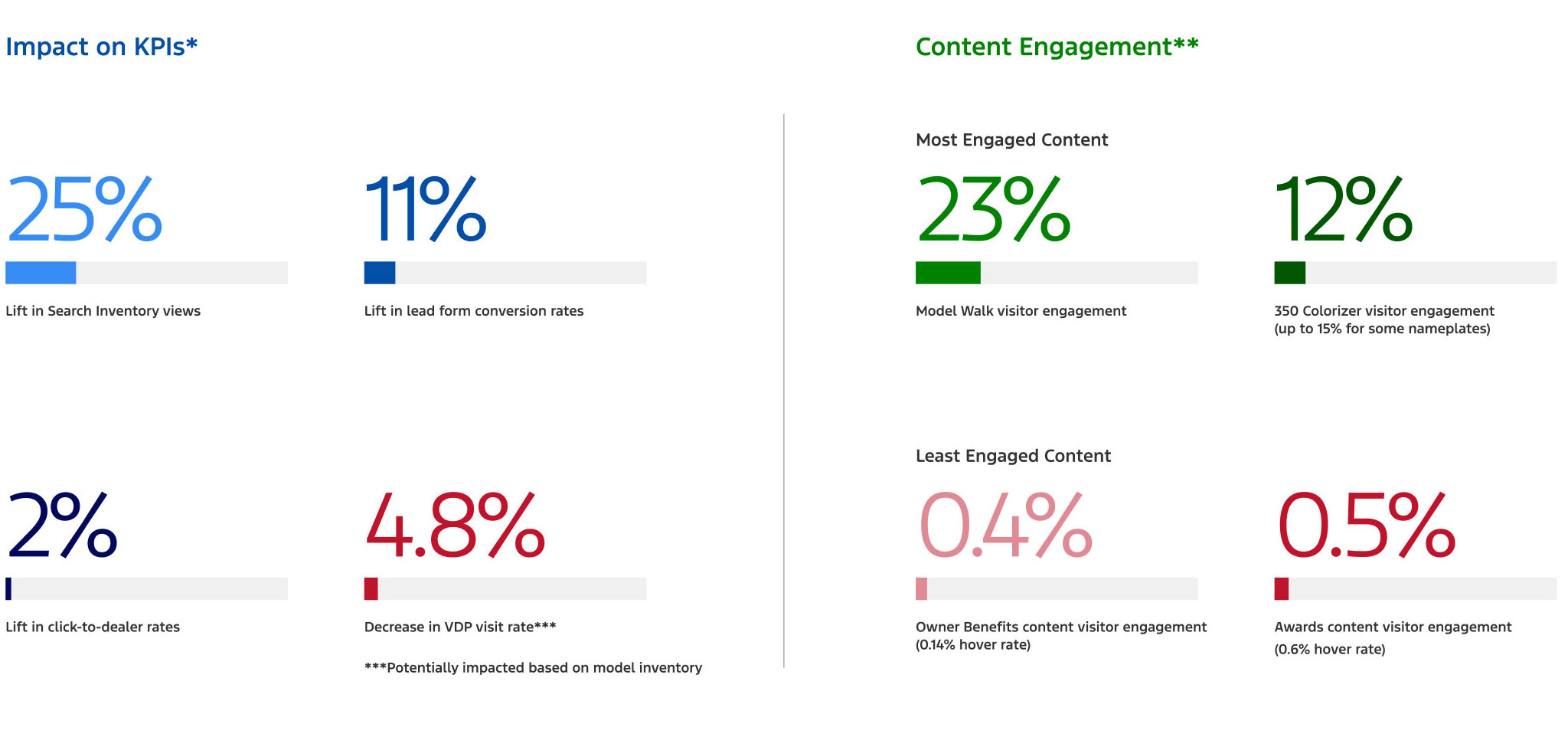
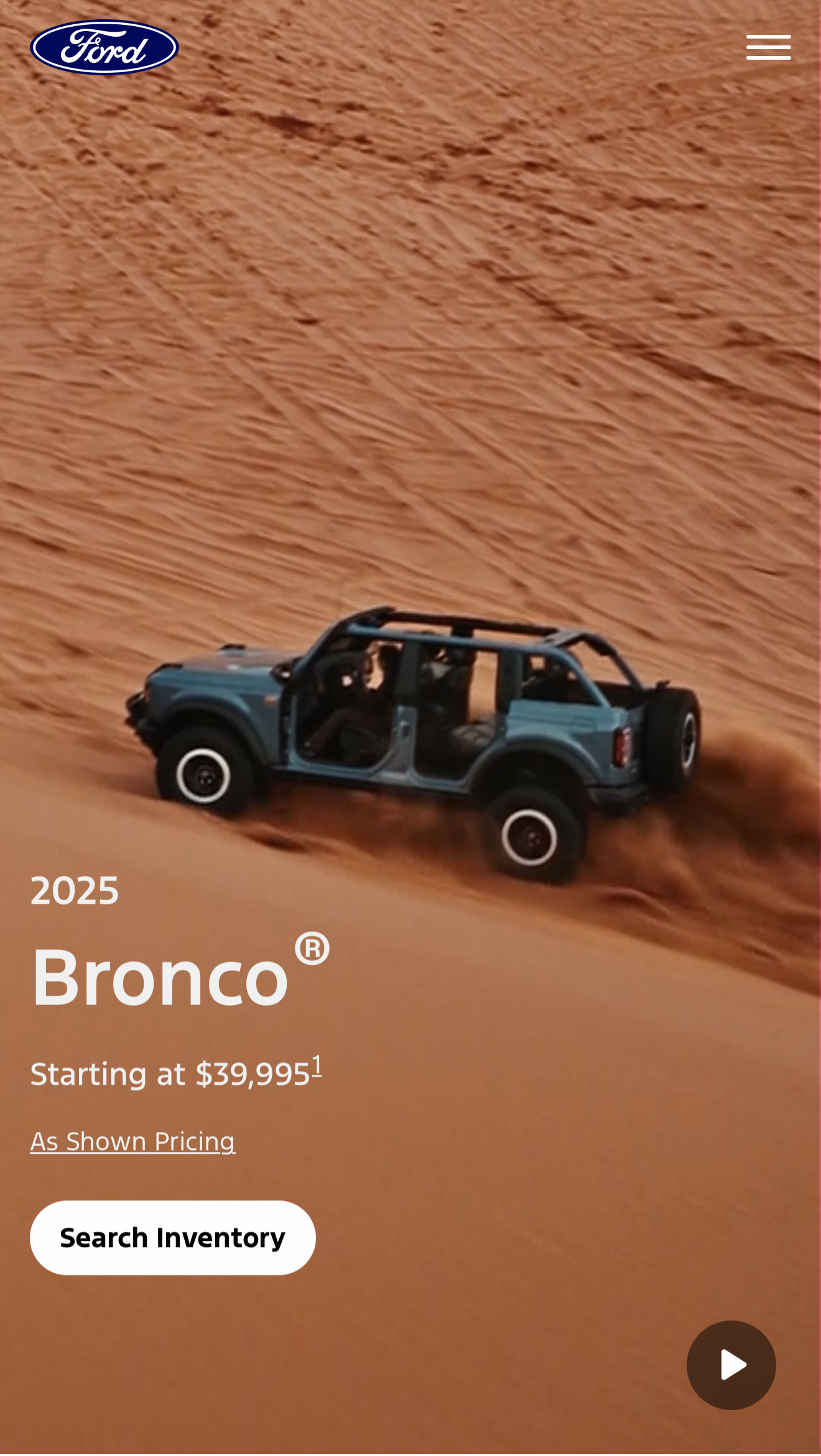
+ 25% increase in Search Inventory views
+ 11% increase in lead form conversion
+ 2% increase in click-to-dealer referrals
The Problem
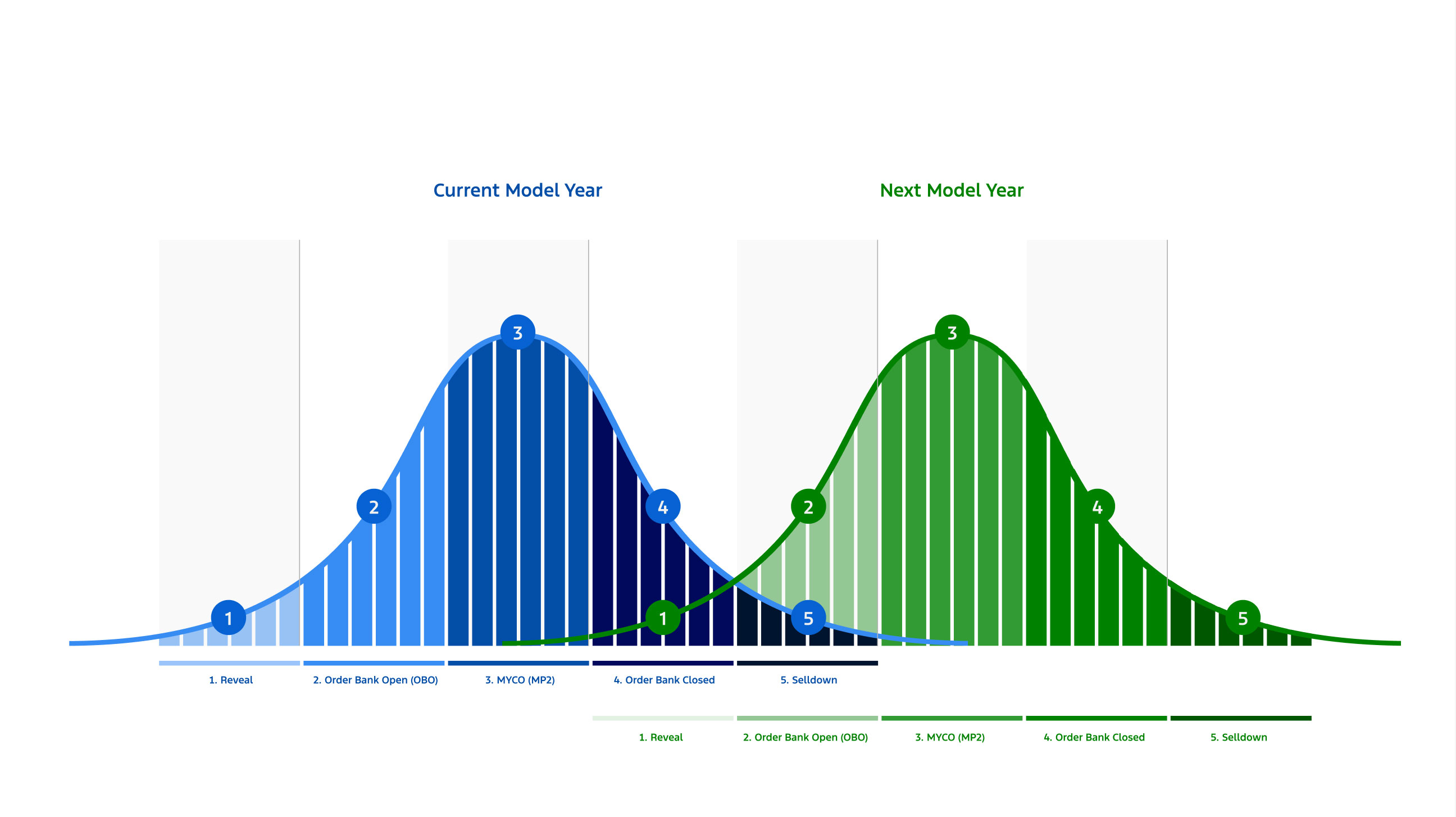
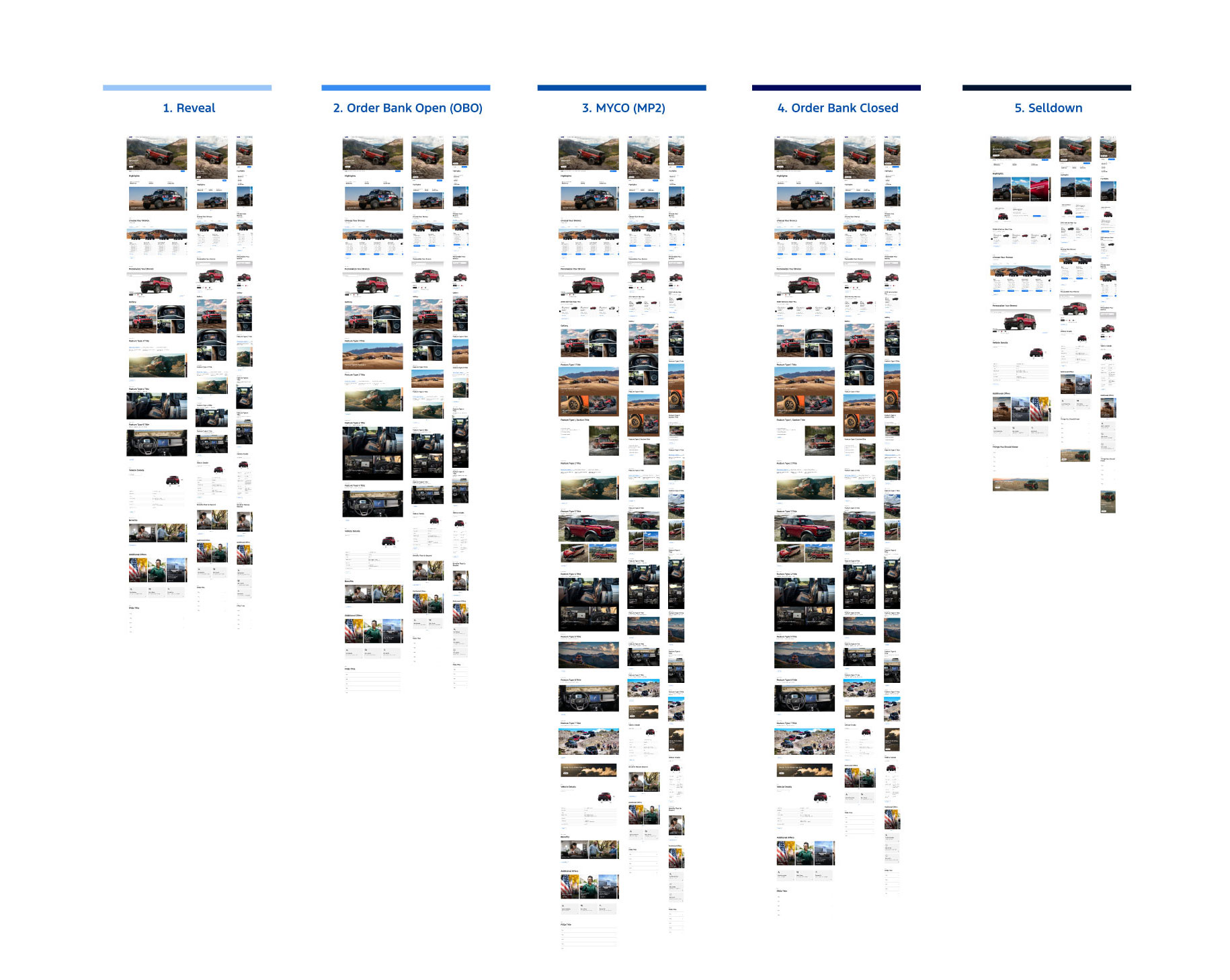
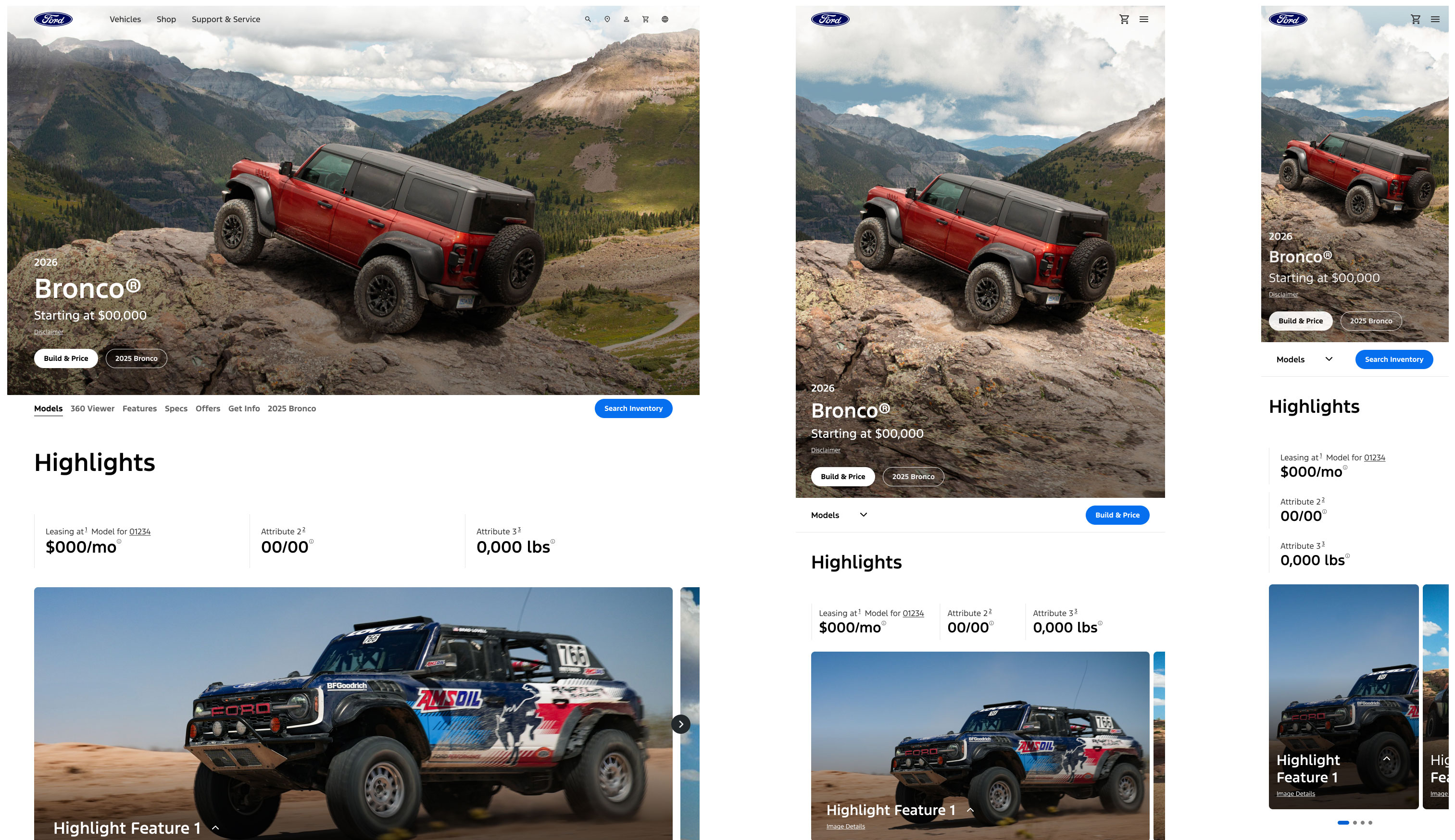
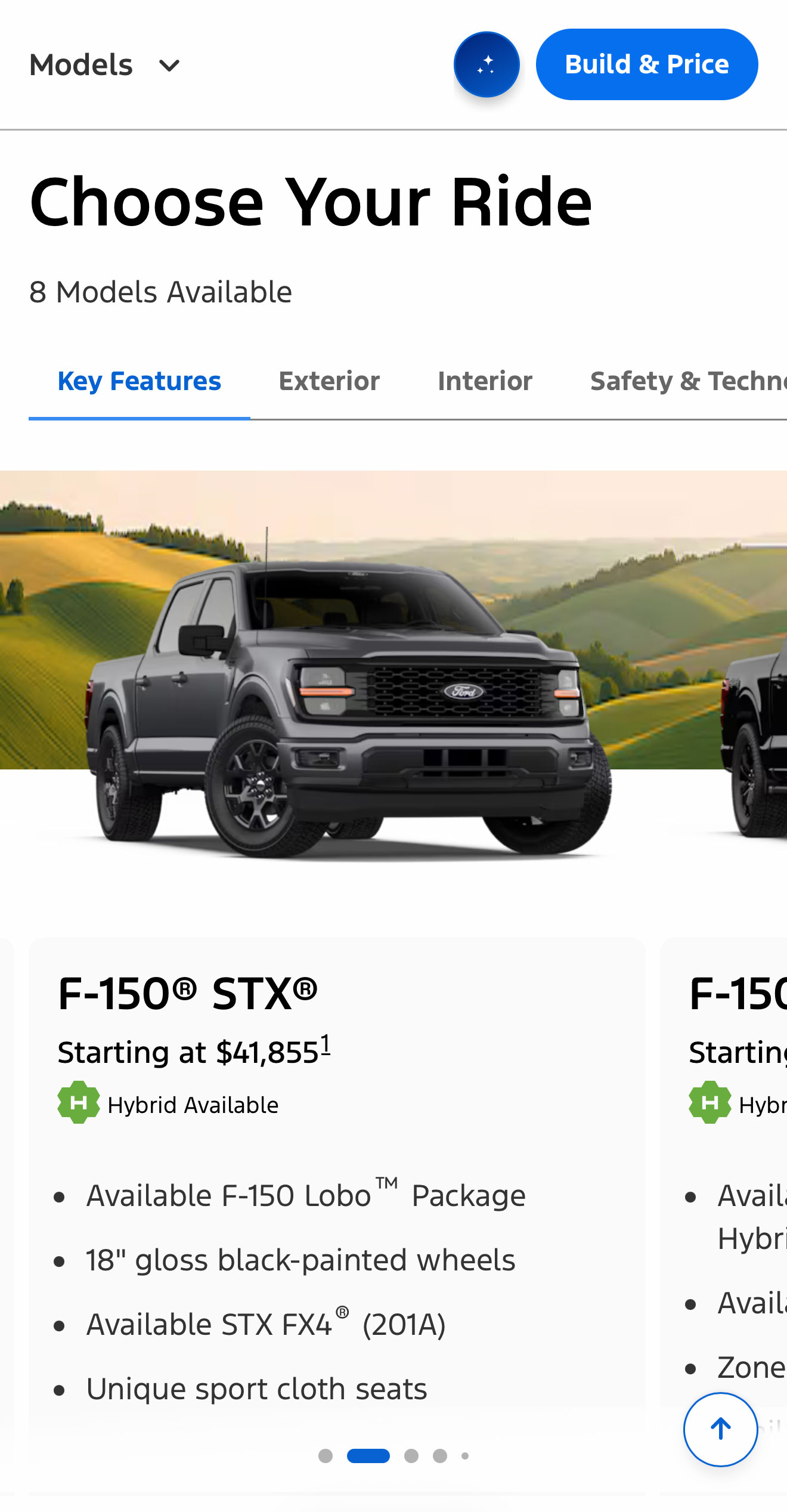
Ford’s Vehicle Homepage was designed as a static experience, despite vehicles progressing through distinct phases of a model year, from reveal and order banking to peak retail availability and final inventory sell-down. As inventory availability and shopper behavior shifted, the page did not adapt, often surfacing actions that no longer aligned with customer intent.At the same time, teams lacked clear documentation and scalable components to support evolving vehicle experiences across multiple launches, creating inefficiencies and inconsistencies in how pages were built and maintained.
Business Goals
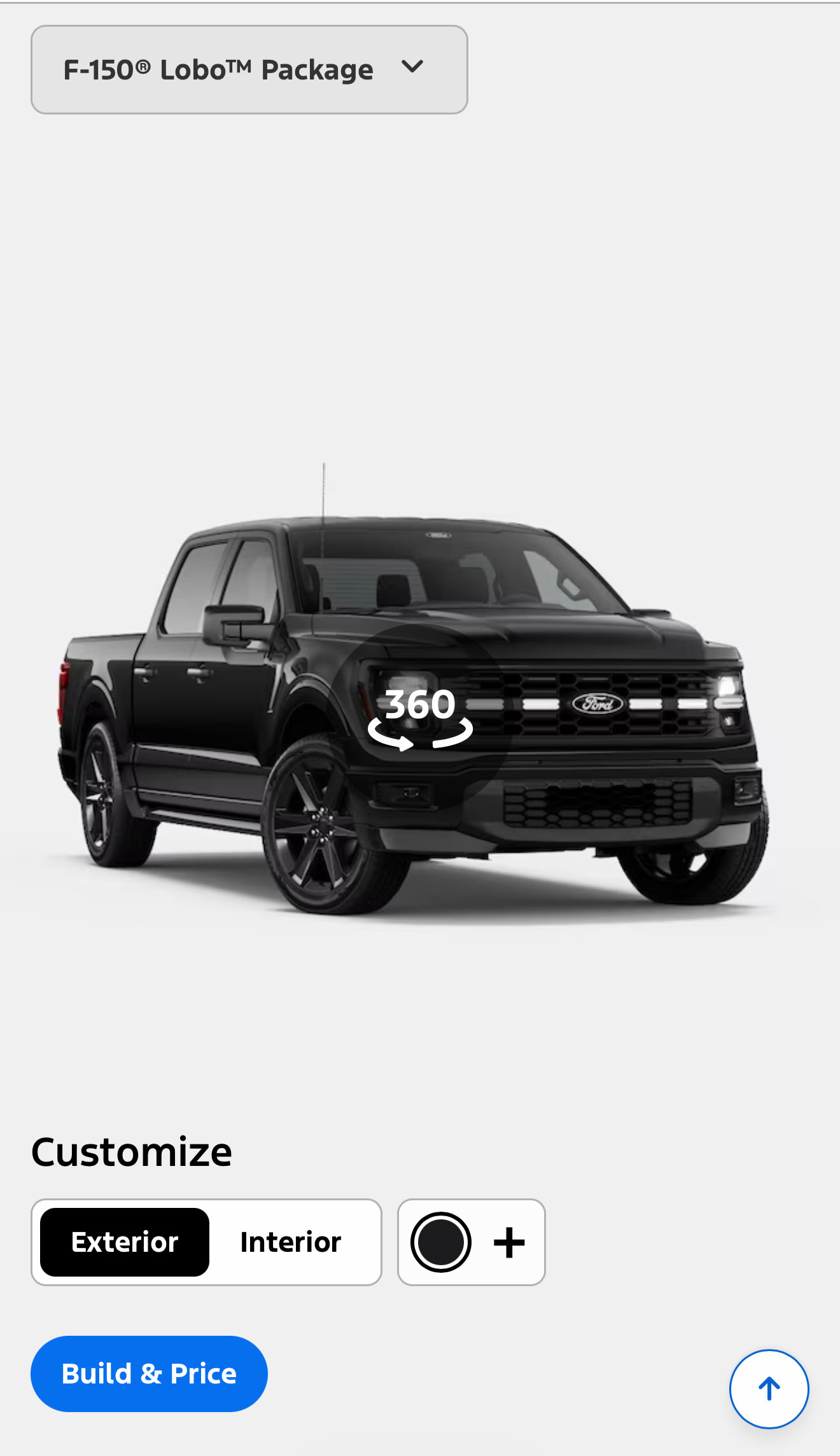
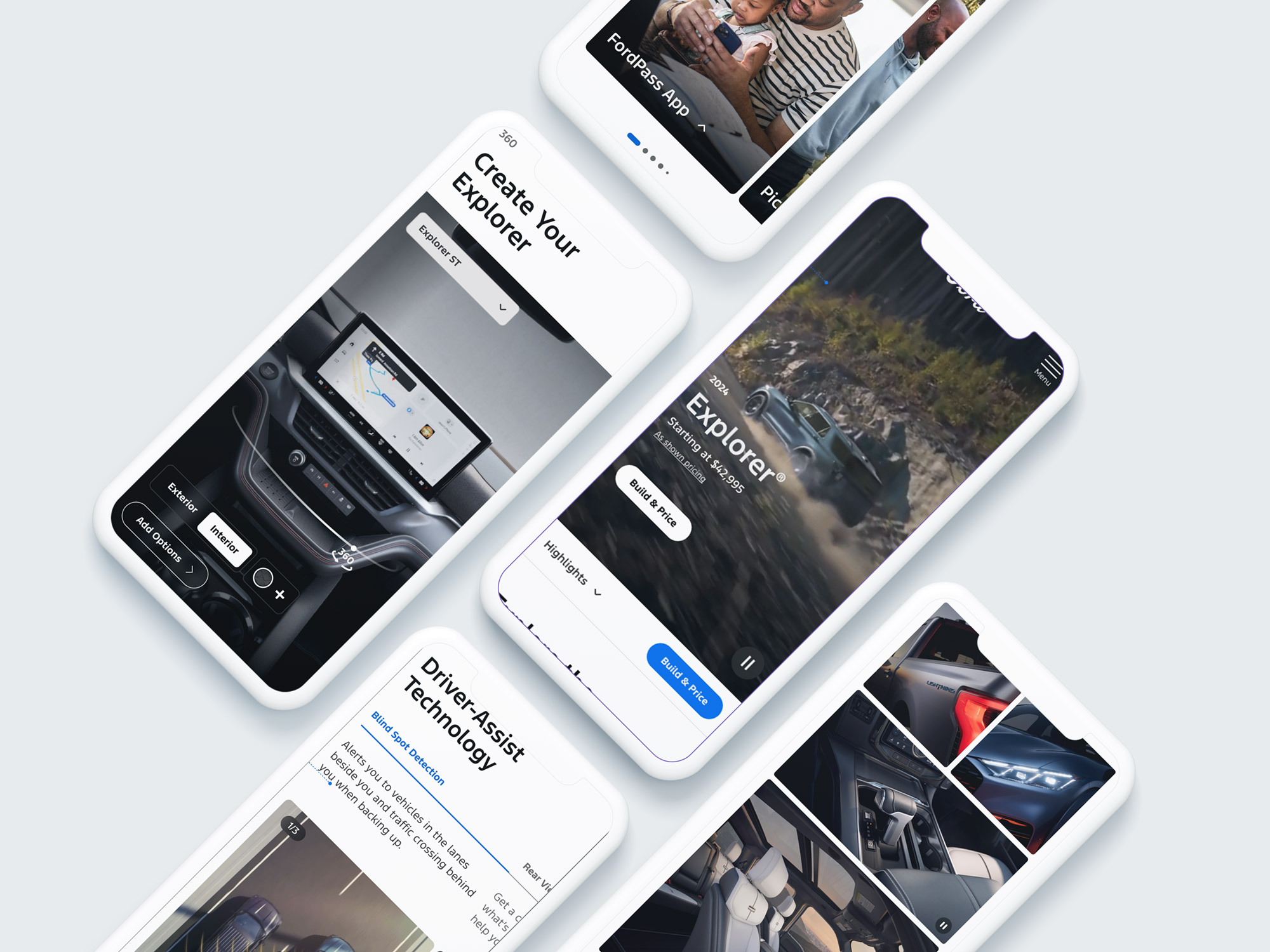
The initiative aimed to align the digital experience with the lifecycle of a vehicle launch, improve inventory discovery and dealer referrals, prioritize high-engagement tools like Model Walk and the 360 Colorizer, and create scalable documentation and design system alignment to simplify how teams launch and manage vehicle experiences.